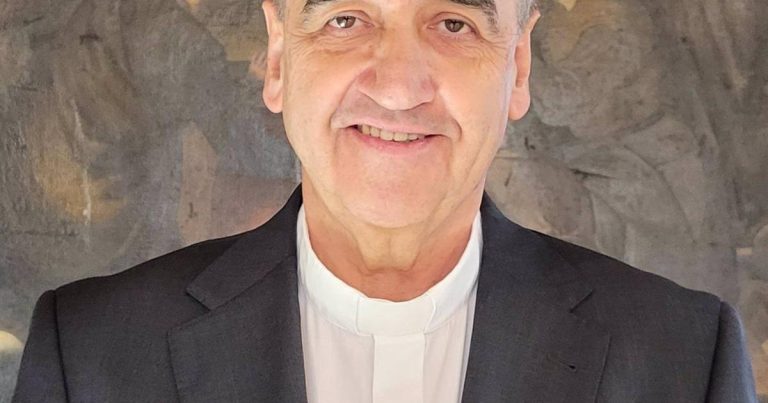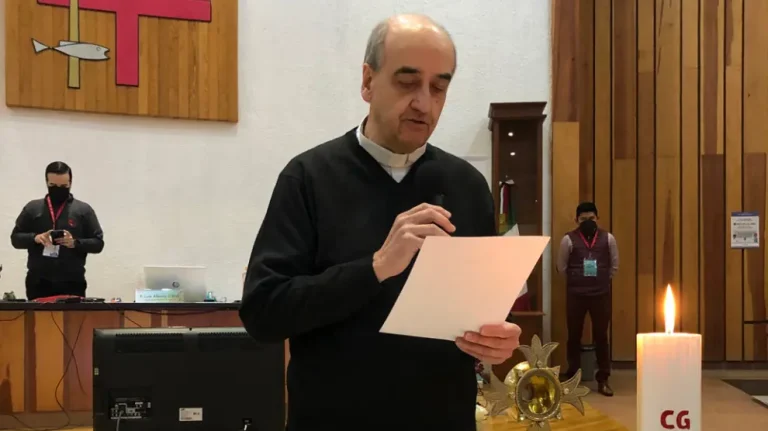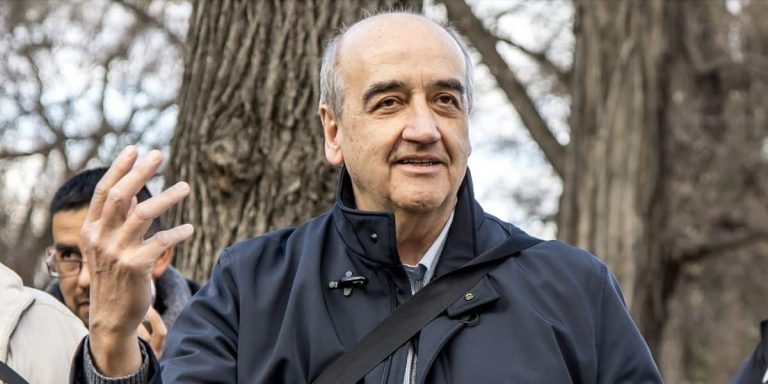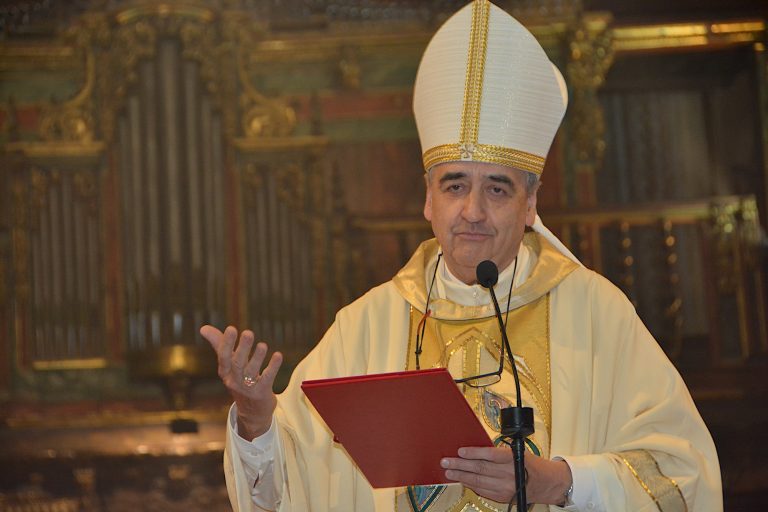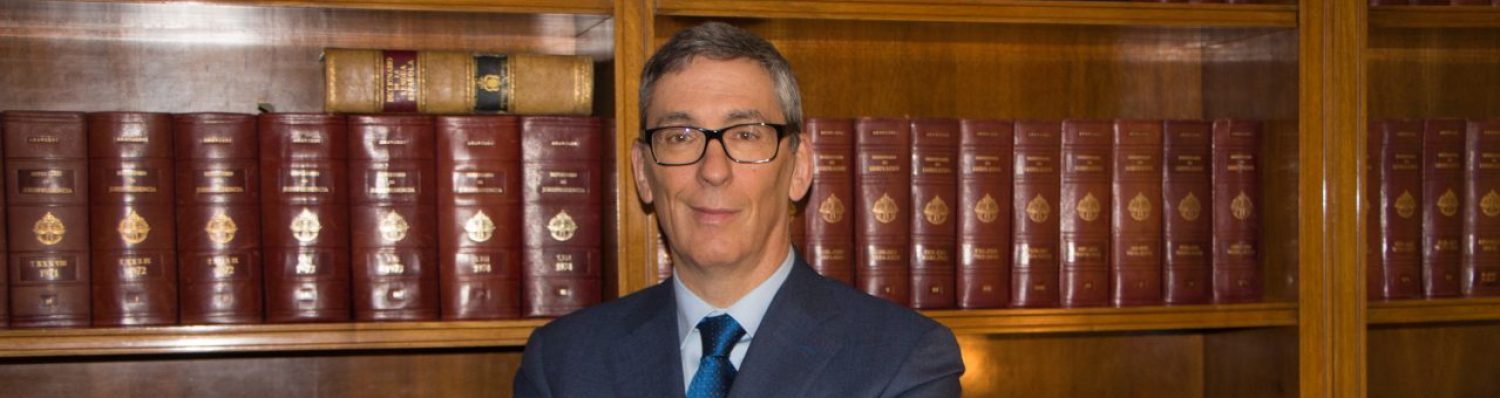

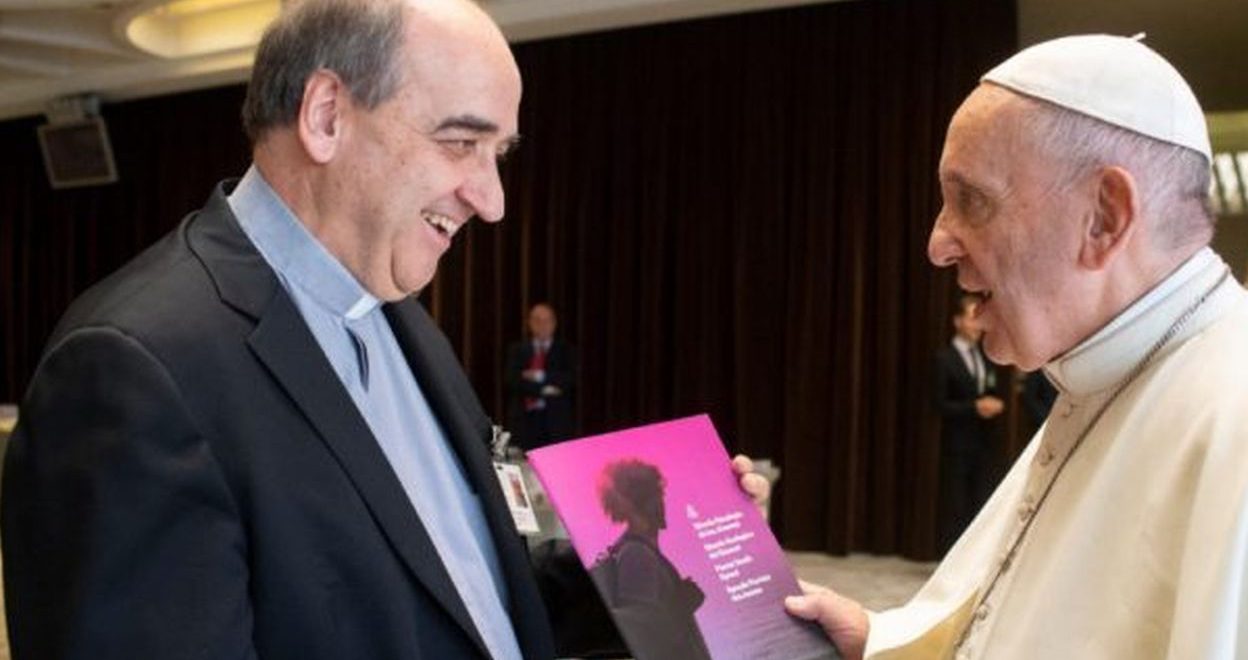
Now Bishop Pedro Aguado, former Superior General of the Piarist Order, with late Pope Francis.
Not to a journalist.
Not to a judge.
Not to an NGO.
She wrote directly to the person who was, at the time, the Superior General of the Order of the Piarist Fathers, Pedro Aguado Cuesta, then based in Rome. The content of that email—now in our possession—constitutes an explicit denunciation of sexual abuse against a minor, identifying the alleged perpetrator, describing the facts that occurred in Mexico, detailing severe psychological consequences, and making a direct request for guidance and justice.
The temporal context is essential. The warning was addressed to the highest authority of the Order before any personal meeting took place, and while Aguado still held full governing responsibility.
It was not a technical or legal document. It was something far more uncomfortable: the direct voice of a mother who, after years of bewilderment, was beginning to understand the origin of her son’s emotional devastation.
The author of the email identifies herself by name and surname. She explains her personal circumstances—recently divorced, with two children—and places the beginning of the events approximately fourteen years earlier. According to her account, a Piarist priest named José Miguel Flores offered to take charge of the education of her eldest son, Javier Alcántara. He proposed to assume responsibility for his schooling and related expenses, presenting himself as a figure of support and guardianship at a time of particular family vulnerability.
The boy was enrolled in school under the direct supervision of that priest. For years, the relationship showed no visible warning signs. Until the religious was abruptly transferred, first to Spain and later to Ecuador. The mother acknowledges that at the time she did not understand either the haste or the reasons for those moves. What she did perceive was the immediate impact on her son: disorientation, behavioral disturbances, and a progressive emotional deterioration, later accompanied by drug use.
Far from remaining passive, the mother drew on her own training and professional experience. With a background in psychology and having worked as an adviser in specialized programs, she decided to entrust her son to an advanced clinic with proven success in treating young people in complex situations. The clinic took charge of the minor within a therapeutic process whose estimated duration was set at around one year.
However, none of this succeeded in addressing the core of the problem.
It was within the therapeutic setting that Javier began to verbalize what had remained silenced for years: the priest who had exercised de facto guardianship over him had subjected him repeatedly to sexual abuse and rape, accompanied by coercion, psychological domination, and a classic pattern of silencing through gifts and material benefits in exchange for his silence.
In her communication to Aguado, the mother did not absolve herself of responsibility. She acknowledged her guilt for not having detected what was happening sooner. That explicit self-criticism—rare in self-interested narratives—strengthens the credibility of her testimony. She asks a direct question: what should be done? She confesses to having lost trust in the Church as an institution, while clearly distinguishing between faith and the men who administer it.
A complaint to the civil authorities has already been filed. The process is ongoing. The mother maintains her demand for full compensation for her son for the serious moral, psychological, and physical damage suffered, with the determination of the amount to be left to the Mexican courts. She also demands to be provided with the formal decree of secularization and expulsion of José Miguel Flores from the Order of the Piarist Fathers—not merely verbal confirmation, as Aguado acknowledged to her—and requests that this documentation be delivered to the local bishop and to the church of baptism of the former Piarist priest.
This demand acquires particular relevance today. José Miguel Flores is now deceased, and yet a series of unresolved irregularities remain. Despite the serious allegations and the mother’s explicit requests, no written decree of dismissal or secularization has been produced. At the same time, public institutional communications have referred to the deceased as an excellent priest and a religious man. The contrast between posthumous praise and the absence of formal documentation raises serious questions about transparency, record-keeping, and accountability within the Order.
The email contains a statement that should have immediately activated institutional protection mechanisms: “I know that there is divine justice, but I also know that in this world there must be the justice of man.” The author admits that she does not possess physical evidence. She offers something more difficult to ignore: a coherent, sustained testimony aligned with patterns widely documented in cases of clerical abuse of minors.
This email—which we analyze here and will publish in photographic form in a subsequent entry—acquires even greater relevance when placed within a broader context that readers can explore through related articles tagged case of Bishop Pedro Aguado and Javier Alcántara. The abuse committed against Javier Alcántara would not have been an isolated incident for this priest. According to subsequent investigations, he had been abusing and raping other minors, a circumstance that eventually raised the alarm of a fellow religious, Father Baltazar. For refusing to keep silent about the abuses, that religious was later removed from the Order.
In 2019, when this email was sent, neither the Church nor Pedro Aguado could plausibly claim ignorance or the absence of norms. The canonical provisions then in force required the opening of a preliminary investigation upon any credible allegation of abuse of minors, the adoption of precautionary measures, and the orientation of victims toward civil justice. A document such as the one written by Javier’s mother—direct, dated, signed, and addressed to the highest authority of the congregation—constitutes, in legal terms, a notitia criminis. Silence or inaction is not neutral; it is, in itself, a relevant fact.
From a journalistic standpoint, the document is a primary source and a foundational piece of the case. It establishes that the highest authority of the Order was informed of names, facts, and the explicit willingness of the victim to testify. Everything that followed—investigations, transfers, removals, posthumous commendations, or silences—must be interpreted in light of that initial warning.
This is not an ideological email, nor an attack on the Church. It is an imperfect account, written with pain and humanity. Precisely for that reason, it is difficult to dismiss. Because it does not seek to destroy an institution, but to protect a son. And because it reminds us of an uncomfortable truth: major scandals do not begin with headlines, but with letters that someone chooses not to answer.
You may want to read the original email, following this link here.
© Jacques Pintor, 2026. All rights reserved. This content is part of an independent journalistic investigation. For communications, clarifications, or the exercise of the right of reply: jacquespintor@gmail.com Follow us on X / Twitter: @jacquesplease