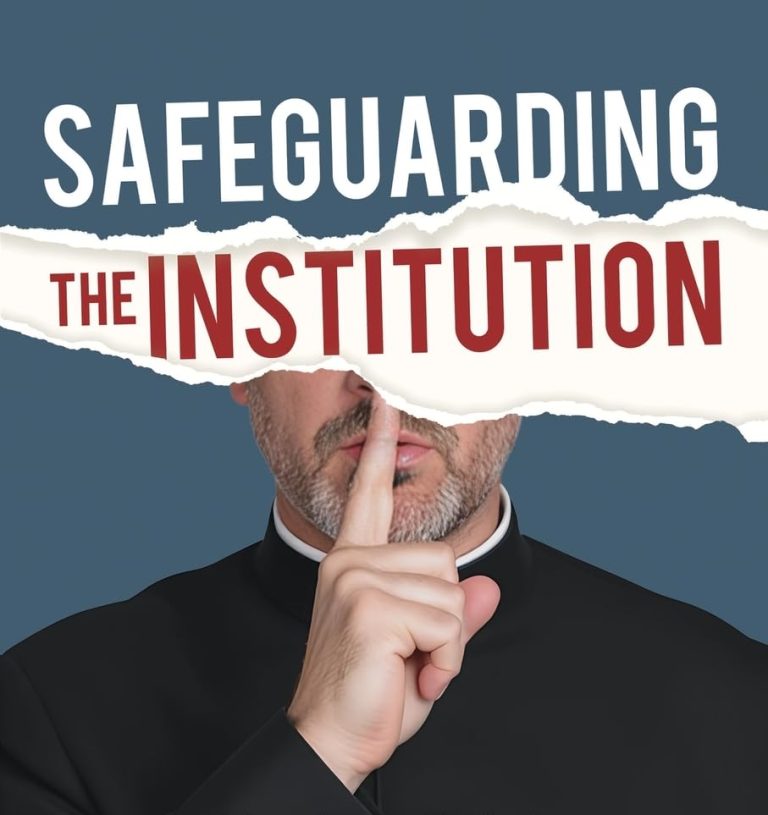
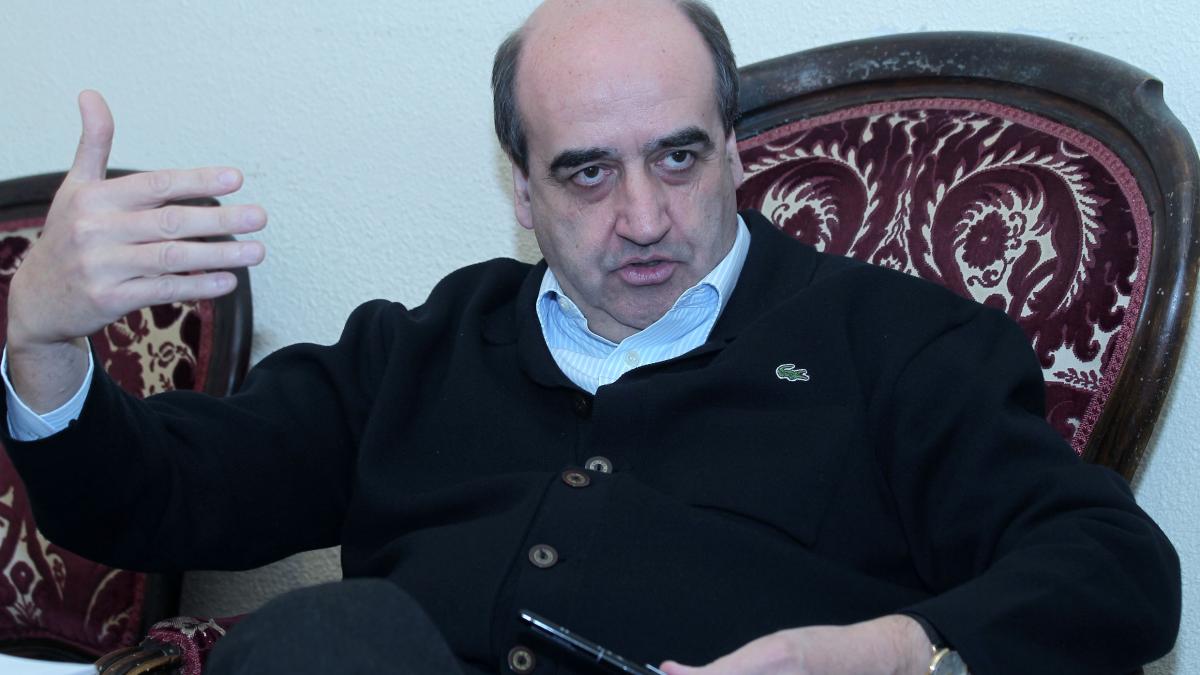
Pedro Aguado Cuesta, Sch.P., served until recently as Superior General of the Piarist Order. He was subsequently consecrated as a bishop and sent to a diocese in Spain already marked by repeated cases and unresolved concerns regarding sexual misconduct within the clergy.
A Warning That Reached the Top
The first email—already established as a foundational document—was not addressed to a journalist, a judge, or an NGO. It was sent directly to the highest authority of the Order of the Piarist Fathers, Pedro Aguado, who at the time held full governing power as Superior General (Pedro Aguado). The message contained all the elements of a credible denunciation: identification of the alleged perpetrator, a detailed account of repeated sexual abuse and rape of a minor, the severe psychological consequences for the victim, and an explicit request for guidance, justice, and formal documentation.
This was not an abstract complaint or a theological reflection. It was the voice of a mother who, after years of confusion and self-reproach, had begun to understand the origin of her son’s devastation. In institutional and legal terms, it constituted a clear warning that demanded action.
The Reply After the Perpetrator’s Death: Consolation Without Documentation
Pedro Aguado’s response—sent after the death of José Miguel Flores—adopts a pastoral and consolatory tone. He expresses understanding for the mother’s pain and insists that she and her husband “did what they had to do.” The narrative emphasis, however, is immediately displaced toward the son’s supposed recovery: his resilience, his capacity to rebuild his life, and his future as a “good husband and father.”
What is absent is as important as what is said. No procedural explanation is offered. No concrete steps are detailed. When Aguado addresses public confusion generated by social media, he asserts—without attaching or citing any document—that Flores had been expelled and secularized, that this was published internally, and that the parish of baptism was notified “as the Church orders.”
The mother had explicitly requested formal written proof. None was produced. Internal circulation is presented as sufficient, while external verifiability is avoided.
“Nueva Etapa”: Management Instead of Accountability
In a separate email addressed to Javier Alcántara, Aguado writes not as a distant superior but as a direct coordinator. He outlines a “Plan Nueva Etapa” that includes employment, housing, accompaniment, education, travel arrangements, and controlled disclosure to a limited circle of superiors. Aguado reassures the victim that he will remain present, even from afar.
Yet the abuse itself is never named. The crime that shattered the young man’s life is absent from the text. What appears instead is a framework of rehabilitation and discretion. The approach is managerial and paternal: to stabilize, to contain, to move forward—without confronting the wrongdoing that made such a plan necessary.
This correspondence confirms that the Superior General (Pedro Aguado) had full knowledge and exercised close involvement, while deliberately avoiding any formal acknowledgment of institutional responsibility.
The Rome Trip: Access Without Records
An earlier email arranges a private trip to Rome for the parents. Flights, hotel, transfers, and personal reception by Pedro Aguado, the highest authority of the Order, are meticulously organized. Institutional resources are mobilized quickly, and direct access to the Superior General is granted.
The contrast is stark. Despite this proximity, responsiveness, and personal engagement, the documentary trail ends there. No decree, no canonical resolution, no written decision is later provided—despite the seriousness of the allegations and the mother’s repeated requests. The Order acted efficiently when it came to meetings and logistics; it fell silent when it came to records and accountability.
Containment Over Truth: How Authority Shielded Itself and the Institution
Read together, the emails reveal a consistent maneuver by male authority figures operating within the institution: to acknowledge pain while deflecting responsibility, to offer accompaniment while avoiding adjudication, and to prioritize the protection of institutional reputation over transparency. The language of care is deployed to neutralize the demand for justice. The narrative of personal healing is elevated to eclipse the question of wrongdoing.
By emphasizing recovery, discretion, and internal handling, the correspondence constructs a form of closure that benefits the institution. The absence of written decrees, the reliance on internal publications, and the repeated assurances without evidence all serve the same purpose: to contain the scandal and prevent it from crystallizing into formal responsibility.
This is not negligence by omission alone. It is an active choice to manage consequences rather than confront causes.
Omissions and Responsibilities: What the Record Shows
From an institutional and legal perspective, the correspondence establishes a series of omissions that cannot be dismissed as incidental. The Superior General (Pedro Aguado) was informed in writing of credible allegations involving the sexual abuse of a minor. He engaged personally with both the mother and the victim. He coordinated responses, meetings, travel, and life arrangements.
What he did not provide—despite explicit requests—were formal documents attesting to disciplinary action, a transparent account of procedures followed, or verifiable proof of canonical measures allegedly taken. Assertions replaced evidence. Theology replaced governance. Pastoral language displaced institutional duty.
Once such a warning is received, silence is not neutral. It becomes a relevant fact. The absence of documentation, the lack of procedural clarity, and the deliberate preference for internal management over external accountability define the responsibility of those who held power and chose how to use it.
#PedroAguado #JavierAlcántara #ClericalAbuse #InstitutionalAccountability #ChurchTransparency
#InvestigativeJournalism

© Jacques Pintor, 2026. All rights reserved. This content forms part of an independent journalistic investigation. For communications, clarifications, interviews, or the exercise of the right of reply, jacquespintor@gmail.com.
Follow us on X / Twitter: @jacquesplease