

The case examined in our previous article—Politics, Sin, and Power in Aragón: From the Altar to the State, Without Accountability—has already crossed a decisive threshold. What began as an investigative exposure has entered the institutional arena. The appointment of Vicente Jesús López-Brea Urbán to a senior post in Aragón’s public health administration has been formally questioned in the regional parliament.
This development confirms what the documentation already suggested: the López-Brea case is no longer a matter of ecclesiastical misconduct or media controversy alone. It is a political issue, with consequences for public accountability, professional standards in the civil service, and the integrity of democratic oversight.
A Climate Known—and Tolerated
The broader ecclesiastical context cannot be ignored. Public statements by Pope Francis acknowledging the presence of serious moral dysfunction within seminaries have been widely reported. Within Aragón, multiple cases involving priests engaged in explicit sexual activity while exercising pastoral responsibilities have been documented over the years.
What distinguishes the López-Brea case is not rumor, but institutional knowledge. López-Brea was entrusted with catechesis for children and adolescents in Jaca while his bishop was fully aware of his double life. At the same time, López-Brea was preparing a transition into the civil administration, aided by political and personal connections, as well as his bishop Julián Ruiz-Martorell.
A Formal Parliamentary Question
On 8 February 2024, Isabel Lasobras Pina, spokesperson for Chunta Aragonesista in the Health Committee of the Cortes of Aragón, submitted a written parliamentary question regarding the appointment of the Director of Management for the Calatayud Health Sector.
The question was precise and exhaustive. It asked:
- What objective evaluation of the candidate’s curriculum justified the appointment;
- How the government considered adequate the designation of a person whose public-sector experience consisted of short-term interim contracts as an orderly and administrative assistant;
- Whether such experience genuinely qualified the candidate to manage a sector employing up to 900 people and involving responsibility for procurement and public spending;
- And whether the Government of Aragón intended to rectify the decision in light of the evident lack of professional qualifications.
The question did not invoke ideology. It invoked professional standards.
The Government’s Response
The response, issued on 20 March 2024, was categorical—and generic. The Government of Aragón asserted that all appointed officials possess the required competence and professional merit. It emphasized López-Brea’s law degree, his previous work in banking, and his ongoing master’s studies, adding that personal interviews are used to assess the values, skills, and proactive attitude of the 27-year-old appointee.
What the response did not address was the substance of the parliamentary question: the absence of demonstrated experience in senior health-sector management; the bypassing of career civil servants with decades of service; the extraordinary speed of the appointment; and the broader personal and moral context surrounding the candidate, including a documented lifestyle involving frequenting sexual clubs while remaining a Catholic priest.
The Reality Behind the Appointment
Investigative reporting had already shown that López-Brea’s preparation was insufficient for a position of this responsibility. His short-term interim contracts appear, in retrospect, not as a coherent professional trajectory but as a stepping stone—allowing entry into the administration via a public examination for an auxiliary restaurant post in a public hospital, followed by a rapid leap to senior management through political influence.
That influence becomes more opaque when personal and institutional links are examined. According to the documentation, the spouse of Jorge Antonio Azcón, President of the Autonomous Community of Aragón, is a partner in a law firm connected to the co-director of a foundation jointly managed with López-Brea’s father. These are not allegations of illegality; they are factual connections that raise legitimate questions about conflicts of interest, loyalty, and political judgment.
At the same time, López-Brea continued to receive ecclesiastical remuneration while preparing this ascent, while the bishop reportedly concealed the reality of the process from the wider hierarchy of the regional Church. His secularization has been delayed due to the absence of a resident bishop in Huesca-Jaca, leaving him in an anomalous position: exercising authority over public healthcare resources while remaining formally a Catholic priest who, until recently, was responsible for children’s catechesis.
Legal Pressure and the Price of Silence
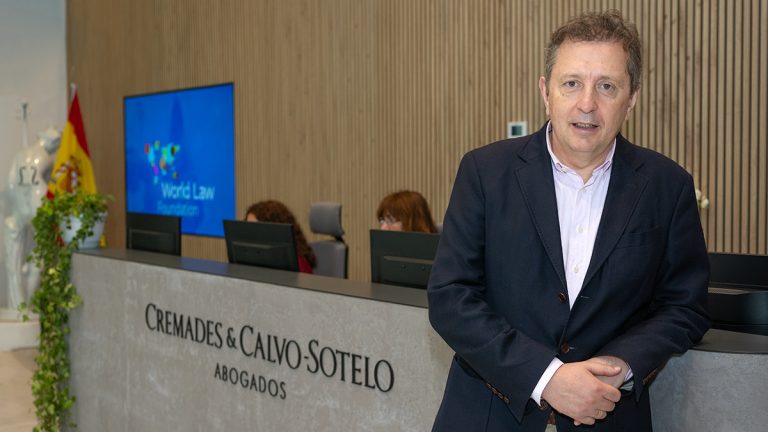
Parallel to these events, Cremades & Calvo-Sotelo has pursued severe criminal penalties against the journalist who exposed the case, Jordi Picazo, a member of the Jacques Pintor team seeking years of imprisonment and damages exceeding half a million euros, embargo for thirty-thousand euros and denial of passport as precautionary measures in case he got condemned.
This is the same firm that received approximately €1.2 million from the Spanish Episcopal Conference to conduct its audit into clerical sexual abuse of minors. The contrast is stark: a system that claims to audit abuse while aggressively prosecuting the journalist who documented institutional failures.
A Political Responsibility
The parliamentary question forces a simple issue into the open: who answers for this appointment?
The documentation shows a priest with a documented double life, protected by ecclesiastical silence; a public appointment that bypassed merit-based norms; a government response that avoids specifics; and legal actions that seek to intimidate investigative journalism.
This is no longer a question of scandal. It is a question of governance.
The Cortes of Aragón have now been formally seized of the matter. Whether accountability follows will determine not only the fate of one appointment, but the credibility of public administration in Aragón itself.
This article continues and expands upon:
Politics, Sin, and Power in Aragón: From the Altar to the State, Without Accountability
All rights reserved, @jacquespintor 2026. For contact, you may want to write to us at jacquespintor@gmail.com. Find us in Twitter @jacquesplease.