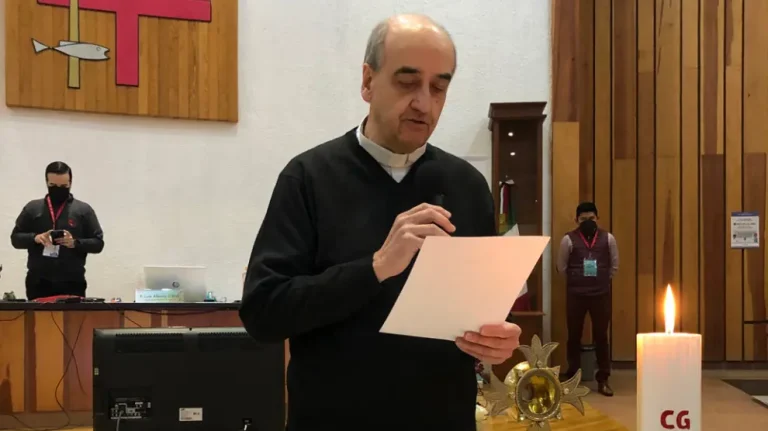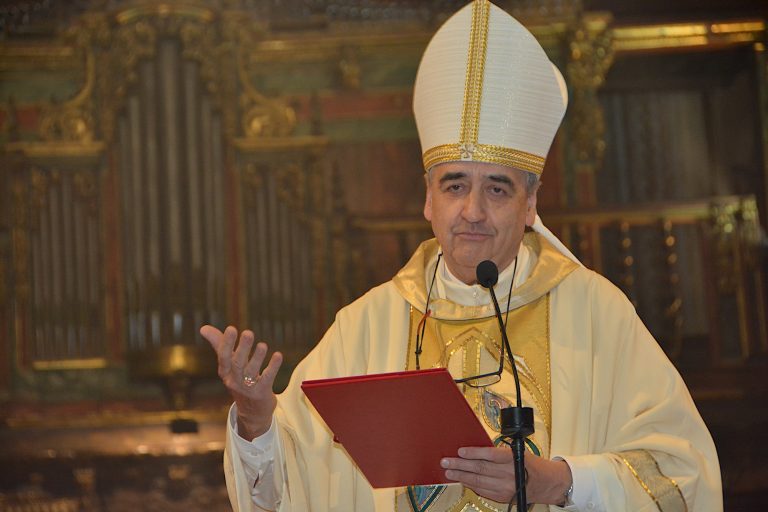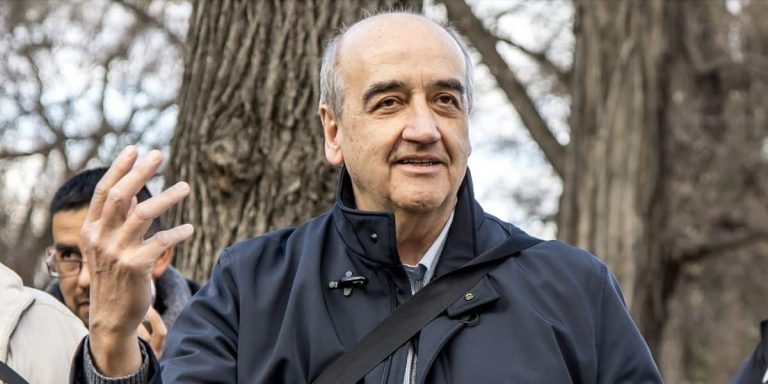

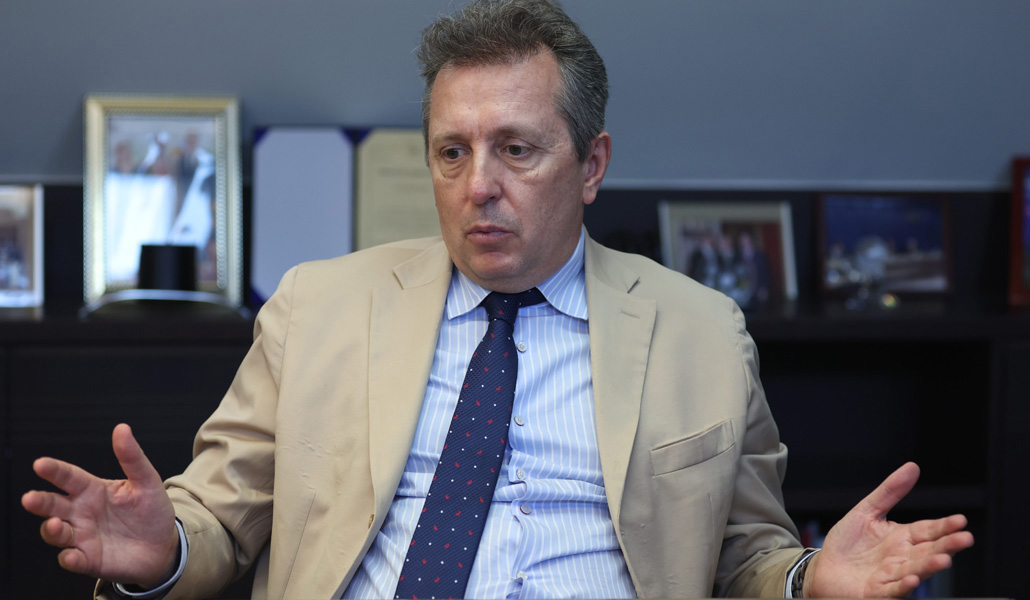
Javier Cremades
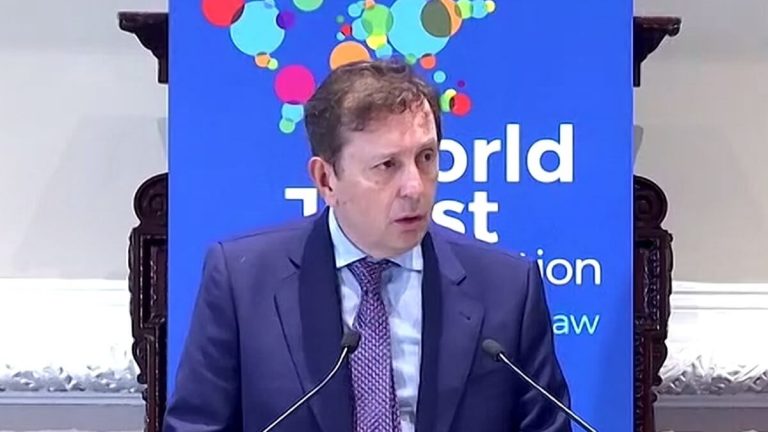
In various international forums, Javier Cremades presents himself as one of the strongest voices in defense of the rule of law, freedom of expression, and the irreplaceable role of journalism in contemporary democracies. He does so as president of the World Jurist Association and as founder of the firm Cremades & Calvo-Sotelo, headquartered in Madrid.
How to Follow This Series
This investigation is published as an open series, in which each installment adds a layer of analysis regarding the use of law as an instrument of pressure against investigative journalism. The installments published so far are:
1. Press Freedom Under Judicial Pressure: Eight Public Questions on the Role of Javier Cremades and the Pajares Firm
A first appeal to public opinion. Eight documented questions that do not accuse, but compel a position regarding coherence, proportionality, and the real impact of legal actions against a journalist.
👉 https://corruptspanish.church/press-freedom-under-judicial-pressure-eight-public-questions-on-the-role-of-javier-cremades-and-the-pajares-law-firm/
2. Javier Cremades, Necessary Cooperator in a Criminal Scheme Against Investigative Journalism
The contrast between institutional discourse on the rule of law and the legal practice deployed against those who investigate abuses and corruption. Here the gap between words and facts is established. This entry.
3. Javier Cremades and the Mechanics of Judicial Persecution Against Investigative Journalism
A detailed analysis of the “how”: criminal complaints, economic pressure, personal measures, and calculated attrition. Not a theory, but a recognizable mechanism with real deterrent effects.
👉 https://corruptspanish.church/javier-cremades-and-the-judicial-persecution-mechanics-against-investigative-journalism-3/
New installments will be added to this index as the investigation progresses.
Javier Cremades, Exemplary Journalism, and the Case That Refutes It
At the International Congress of the World Jurist Association held in Santo Domingo (2025), Cremades insisted on a central idea: without a free, rigorous, and courageous press, the rule of law becomes an empty slogan. The same message reappears, in an even more explicit tone, in his speech at the International Press Club Awards, where he vindicates “journalistic rigor,” the pursuit of truth, and the protection of reporters against pressures from power.
That is the public discourse.
The problem — and the core of this investigation — is that this discourse coexists, without interruption, with a legal practice that directly contradicts it.
The Case That Breaks the Narrative
While Javier Cremades praised rigorous journalism in international forums, his own firm — through its representation in Zaragoza, Pajares Abogados — was directing a criminal, economic, and personal offensive against an investigative journalist: Jordi Picazo, the only Spanish member of the international Jacques Pintor team.
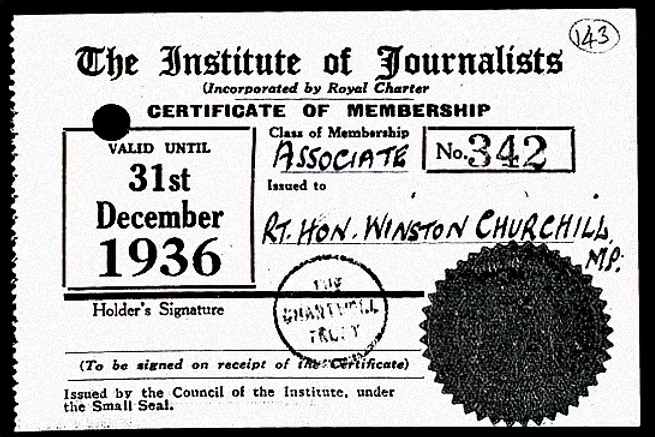
Here a revealing curiosity appears, one that is not anecdotal but profoundly symbolic: Jordi Picazo is, am, to the best of record, the only Spanish journalist who is a member of the Chartered Institute of Journalists, the first professional body of journalists in the world, with a Royal Charter and headquarters in London. An additional fact reinforces the paradox: Winston Churchill, a historical driving force behind the international jurists’ movement from which the World Jurist Association would later emerge, was also an accredited member of this Institute. I also had the privilege of serving as a tenured teacher at the secondary school where Churchill studied, an institution with more than four centuries of history, in London.
In other words: the journalist being prosecuted belongs to the same institutional tradition as the historical reference of international jurism invoked today in Cremades’ discourse.
The legal offensive is neither abstract nor rhetorical. It materializes in:
- requests for prison sentences,
- preventive asset seizures and substantial financial claims,
- precautionary gag measures,
- personal restrictions, including the withdrawal of a passport,
all in a context in which the Public Prosecutor’s Office finds no crime and recognizes the informative purpose of the journalistic work.
This is not, therefore, a theoretical conflict between honor and freedom of expression, but an intensive use of the judicial apparatus with deterrent effect, typically described in international literature as a SLAPP.
From Auditor of Abuses to Prosecutor of the Informer
The contradiction becomes even more serious when one incorporates an objective and incontrovertible fact:
Cremades & Calvo-Sotelo was the firm entrusted by the Spanish Episcopal Conference to audit sexual abuses within the Church, for an approximate fee of 1.2 million euros.
In other words:
the same firm that presents itself as guarantor of transparency and accountability within the Church
directs — directly or indirectly — judicial actions aimed at silencing the journalist who documents compliance failures, cover-ups, and abuses of power within that very institution.
The Praise of Rigor… and the Denial of the Journalist
Cremades’ speech at the International Press Club Awards emphasizes that journalism must be rigorous, verified, and responsible. However, in the proceedings against Picazo:
- his status as a journalist is questioned,
- the use of a blog as a professional tool is delegitimized,
- the public interest of the facts is reduced to an alleged “private sphere,”
- preventive silence is imposed without a final judgment.
The paradox is evident: journalistic rigor is celebrated in speeches, but punished when it becomes inconvenient to concrete power structures.
The Question That Can No Longer Be Avoided
In light of these documents — Cremades’ public discourse, his institutional position, and the real actions of his professional environment — the question is no longer rhetorical:
Can a system that punishes the journalist who investigates abuses, while rewarding the lawyer who audits them, continue to speak credibly of the “rule of law”?
When the language of the rule of law becomes an alibi, it is necessary to examine not only what is said, but whom one seeks to silence so that they stop speaking.
Yanelis Tovar. Editor
Readers are invited to comment, contribute information, and participate in a factual and respectful debate.

If you believe that any factual statement contained in this article is inaccurate, you may contact the editorial office to exercise your right of reply or request a factual clarification or correction, in accordance with journalistic standards.

The editorial team is also available to grant interviews; this applies — with due guarantees of protection — also to some of the affected individuals.

© Jacques Pintor, 2026. All rights reserved. Any reproduction or redistribution without prior authorization is prohibited. Contact: jacquespintor@gmail.com

#InvestigativeJournalism #RuleOfLaw #PressFreedom #SLAPP #PublicInterest #CremadesCalvoSotelo
#InstitutionalTransparency #PressFreedom #RuleOfLaw #InvestigativeJournalism #FreedomOfExpression #PublicInterest