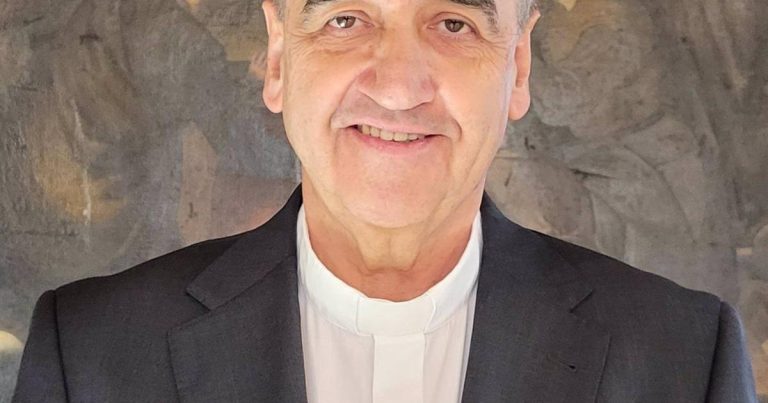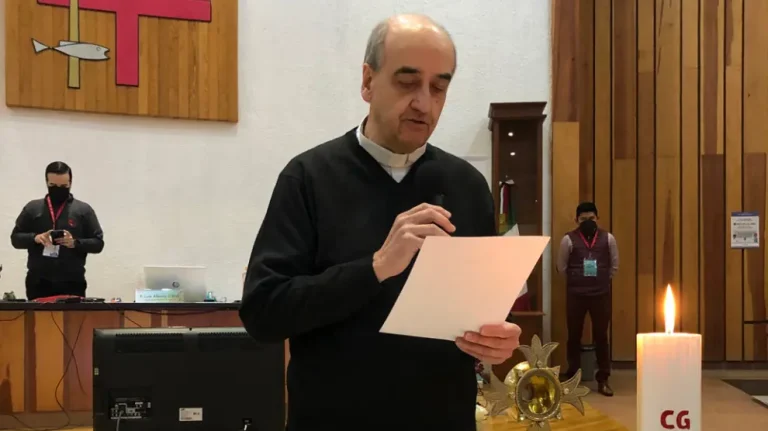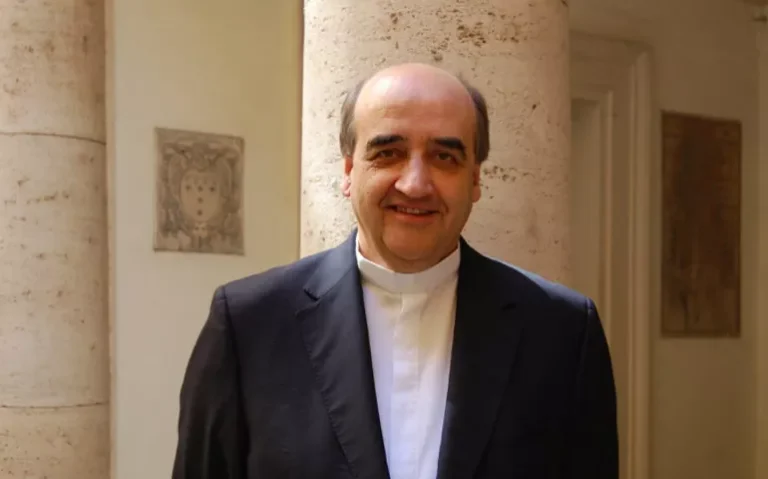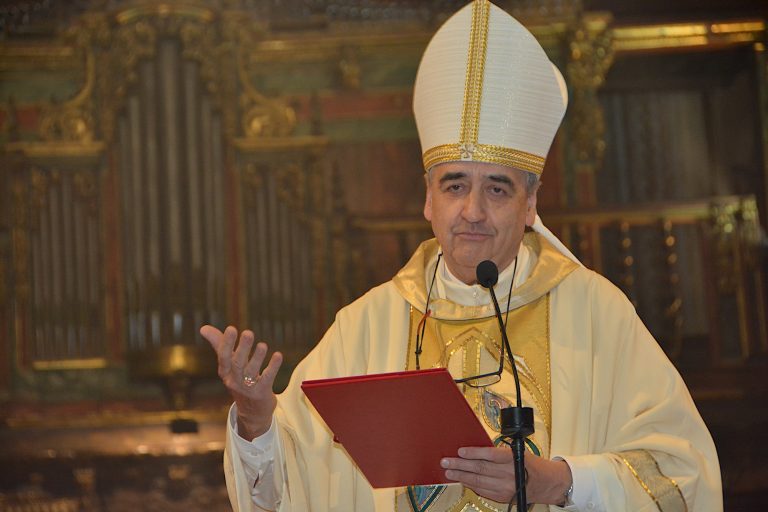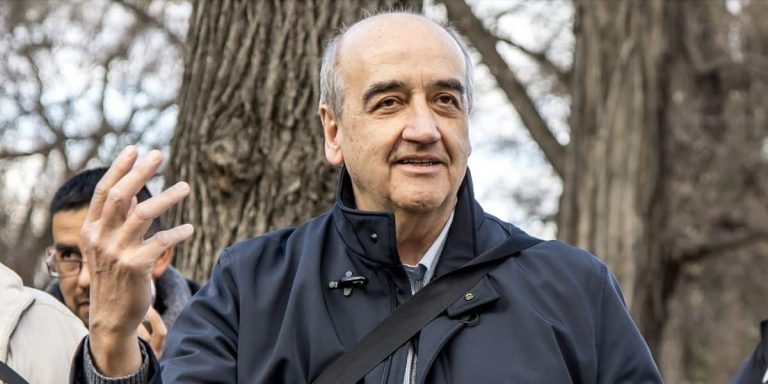

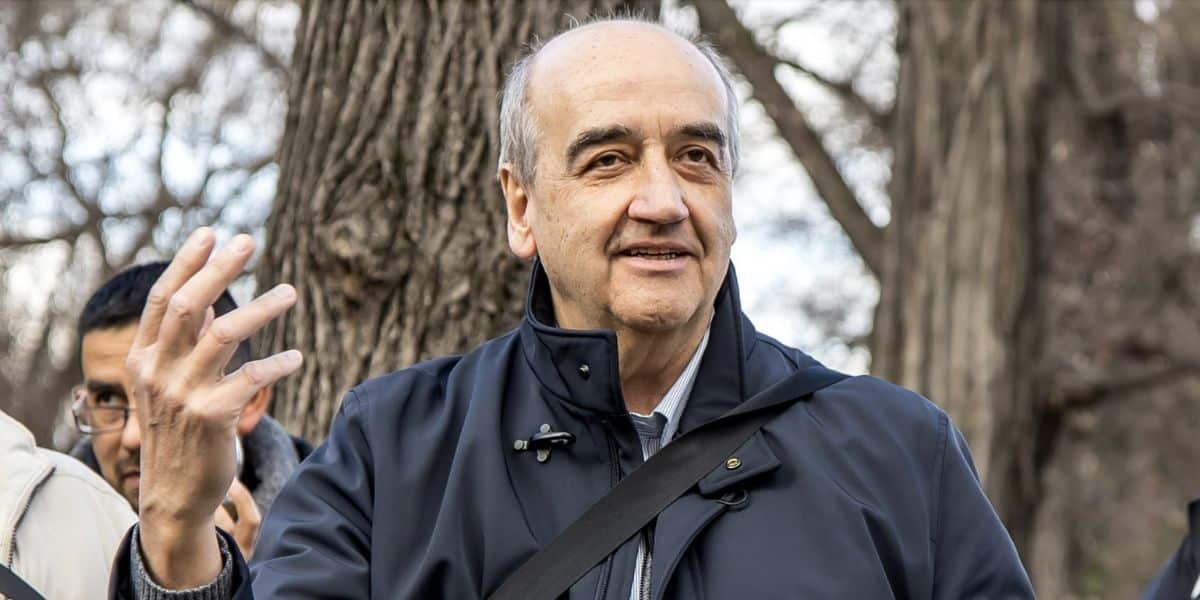
Bishop Pedro Aguado-Cuesta of Huesca-Jaca, Spain
Pedro Aguado
Former Superior General of the Piarist Order Monsignor Pedro Aguado Cuesta, now consecrated bishop and sent to Spain, following accusations of institutional cover-up of clerical sexual abuse in Mexico.
The current Bishop of Huesca-Jaca, Pedro Aguado Cuesta, is named as a suspect in an investigative file opened in Mexico City for alleged concealment of sexual abuse committed during his tenure as Superior General of the Piarist Fathers.
According to documentation delivered to the victim, Javier Alcántara, at the prosecutor’s office on February 19, 2026, a formal summons was issued on November 25, 2025, requiring him to appear on December 4, 2025, in the capacity of criminal suspect. The notification was served at the official headquarters of the Order in Mexico City.
Also listed as suspects in the same file are:
- Sergio Fernando Hernández Avilés, Provincial of the Piarists in Mexico.
- José Luis Sánchez Macías, Econome (financial officer).
Both appeared in advance on November 25, stating that work-related obligations prevented them from attending on the scheduled date, and exercised their constitutional right to remain silent.
In the documentation reviewed, there is no record of any formal justification for non-appearance submitted by Pedro Aguado. In a telephone conversation with our team, Javier Alcántara stated:
“They summoned Pedro Aguado at the provincial house… Pedro Aguado did not come. The summons was issued in the names of all three… it was received.”
According to his account, the Prosecutor’s Office informed them that they are “already suspects” and that the case file remains under active investigation.
Sergio Fernando Hernández Avilés, Provincial in Mexico
The Mexican Provincial, now also listed as a suspect in the same case file, delivered a public eulogy in 2022 following the premature death of Miguel Flores Martínez, the priest accused of the reported abuse. No details have been publicly disclosed regarding the cause of death of José Miguel Flores.
In that message, he presented the accused Piarist priest—alleged to have raped minors—as an exemplary religious and devoted cleric, without publicly acknowledging the existing accusations or the prior complaints already recorded within the institution since 2019. According to what Pedro Aguado reportedly told the victim, a reduction to the lay state had been contemplated, as well as a prohibition against approaching minors—measures that were never effectively enforced.
The coexistence of that public tribute and the subsequent designation as a suspect in a concealment investigation creates a significant institutional contrast.
Episcopal Consecration in Spain in 2025 and Penal Activation the Same Year in Mexico
Pedro Aguado was consecrated bishop in June 2025 for the Diocese of Huesca-Jaca in Spain. That same year, according to the Mexican prosecutorial documentation, he was summoned as a criminal suspect. The prelate did not appear, and no known explanation has been publicly provided.
The Aragonese diocese has not been immune to recent politico-religious controversies, including the institutional promotion of a priest leading a double life into positions within the public administration, supported with diocesan financial resources and backed by the regional president, Jorge Azcón, a family friend and associated with the priest’s father through foundations linked to the Diocese of Zaragoza and major Spanish multinational corporations. Azcón is expected to play a leading role in Pope Leo XIV’s upcoming visit to Spain scheduled for June 2026, as is Pedro Aguado.
The temporal coincidence between episcopal promotion and the formal activation of a criminal summons inevitably raises institutional questions.
Emails Demonstrating Knowledge of the Minor’s Rape Since 2019
The documentation already published allows for a clear reconstruction of events.
On September 4, 2019, the victim’s mother wrote to Pedro Aguado—then Superior General of the Piarists and residing in Rome—informing him that her son had been repeatedly raped by Piarist Father Miguel Flores Martínez. She added that her son was prepared to file a complaint and explicitly asked what steps she should take.
Days later, Pedro Aguado arranged for the mother to travel to Rome to meet with him.
On November 15, 2019, Aguado sent her an email titled “Plan nueva etapa” (“Plan for a New Stage”), stating that the Mexican Provincial and the local superior were fully informed and detailing internal measures of accompaniment, reassignment, and support.
None of these communications referenced the activation of civil criminal proceedings or notification to state authorities.
By 2019, Pope Francis’ motu proprio Vos estis lux mundi was already in force. Promulgated that same year, it established the obligation to investigate abuse allegations diligently and to comply with applicable civil laws, including mandatory reporting to competent authorities where required.
The omission of any reference to the civil reporting route constitutes today a central element of the legal debate.
Financial Transfers Following the Complaint
Following the first formal complaints in 2019, Javier Alcántara states that he received periodic cash payments directly from Pedro Aguado Cuesta.
In the aforementioned conversation of February 19, 2026, he stated:
“Pedro Aguado would see me periodically and give me one thousand euros, two thousand euros in cash, without any traceability.”
According to his testimony, these payments were not formally presented as compensation nor as part of a written comprehensive reparation agreement—an essential point in this matter. He also refers to moral reparation, to studies whose funding was discontinued by the foundation shortly before completion, and to healthcare professionals.
He added:
“It was more like paying me so that I wouldn’t report them.”
Alcántara maintains that these amounts, delivered in cash and without banking traceability, were provided in response to his personal hardship following the reported events.
Ongoing Criminal Investigation with Potential International Implications
The investigation opened in Mexico is currently in an active penal phase.
In proceedings of this nature, if the Prosecutor considers in-person testimony necessary, the suspect may be required to appear physically in Mexico City. Spain and Mexico maintain judicial cooperation agreements.
There are precedents within ecclesial contexts. The case of Argentine Bishop Gustavo Zanchetta concluded with a four-year prison sentence for crimes related to sexual abuse. Zanchetta had previously resided at Casa Santa Marta in the Vatican under Pope Francis before being tried and convicted in Argentina.
In that context, the name Javier Belda also emerged—a priest who presented himself as a canon lawyer, was later laicized, and was expelled from the Catholic University of Murcia after it was established that he had falsified multiple academic credentials. He had held positions as Coordinator of International Relations at UCAM and at the re-founded John Paul II Institute for Marriage and Family. Belda accompanied Zanchetta to Argentina. It also became known that he habitually lived with a woman.
This precedent demonstrates that episcopal status does not automatically shield an individual from ordinary criminal jurisdiction.
Pedro Aguado currently resides in Spain. The judicial cooperation agreements between Mexico and Spain prevent foreign residence from functioning as an automatic shield. In extreme scenarios, should there be no voluntary appearance and the proceedings advance, Mexico could activate international cooperation mechanisms, including a potential extradition request.
Alcántara interprets the evolution of the procedure as firm progress:
“We are going to reach trial. Yes, we are going to reach trial.”
The final decision rests with the Public Prosecutor’s Office and, if applicable, with the competent control judge.
The Core of the Debate
This is not merely an internal matter of the Piarist Order. The documentation demonstrates knowledge of the sexual abuse committed by Father José Miguel Flores since 2019. The formal summons as a suspect is dated November 2025. The episcopal consecration took place in June 2025.
The underlying legal question is not rhetorical: What exactly did the ecclesiastical authority do when it became aware of the facts, and what civil obligations were in force at that time?
Alcántara maintains that institutional knowledge was prior and ongoing. In his words:
“Since 2010 they knew he was a pedophile and they never handed him over to justice.”
This statement forms part of the accusation and must be tested in court.
Readers are invited to comment, provide information, and participate in a factual and respectful debate.

If you believe that any factual statement contained in this article is inaccurate, you may contact the editorial office to exercise your right of reply or to request clarification or factual correction, in accordance with journalistic standards.

The editorial team is also available to grant interviews; this applies—under appropriate safeguards—to some of the affected individuals as well.

© Jacques Pintor, 2026. All rights reserved. Any reproduction or redistribution without prior authorization is prohibited. Contact: jacquespintor@gmail.com

Readers may also wish to consult the Spanish-language version for further details and access to links to additional related publications.

#PedroAguado #JavierAlcántara #SexualAbuse #InstitutionalResponsibility #EcclesialTransparency
#InvestigativeJournalism #Aragon #CELAM #Mexico