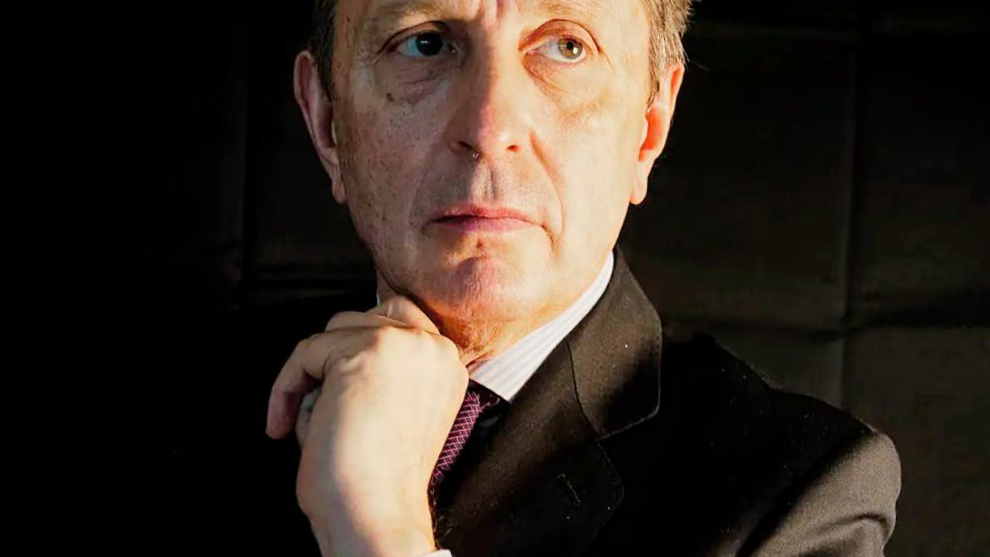
Javier Cremades, Präsident der Kanzlei Cremades & Calvo-Sotelo (Madrid) und amtierender Präsident der World Jurist Association.
It’s About Words — and What Is Done With Them
Words matter. Especially when they are spoken from positions of power.
In Santo Domingo, Javier Cremades, current president of the World Jurist Association and president of the Madrid-based law firm Cremades & Calvo-Sotelo, delivered a solemn defense of the rule of law. He spoke of legality as a guarantee of freedom, of law as a shield against arbitrariness, and of institutions bound by principles designed to protect the weak from the strong.
There was nothing unlawful in the speech. There was nothing improper in the tone. There was nothing objectionable in the words — taken in isolation. But words do not exist in isolation. They acquire meaning through conduct.
This investigation begins with a breach. A breach of coherence between what is proclaimed in international forums and what is executed through legal practice. A breach of confidence between professional assurances and subsequent actions. A breach of the very principles that the rule of law is meant to embody.
Because while the rule of law was being publicly exalted, legal strategies were being pursued that sought prison sentences, economic devastation, personal coercion, and the silencing of investigative reporting. Not against an abstract critic. Not against a hypothetical actor. But against a real journalist, acting in the public interest, whose work concerns institutional abuse and failures of accountability.
That journalist is Jordi Picazo, the undersigned.
The contradiction is not subtle. It is structural. On the one hand, the language of legality, dignity, and democratic restraint. On the other, the deployment of criminal complaints, disproportionate financial claims, precautionary measures, and pressure mechanisms that — taken together — constitute the criminalisation of journalism. These outcomes are not accidental. They are the foreseeable consequences of a legal strategy that treats investigation itself as an offense.
This is the point at which the rule of law ceases to be an idea and becomes a test. When the law is used not to protect the public from abuse, but to protect abuse from public scrutiny, legality is no longer neutral. It becomes complicit. When legal instruments are employed to exhaust, intimidate, and silence a journalist investigating matters of undeniable public relevance, the language of the rule of law is stripped of meaning.
This is not a matter of opinion. It is a matter of record. The documents exist. The filings exist. The measures exist. The demands for custodial sentences exist. The financial claims exist. The restrictions exist. Together, they form a pattern that European standards recognise as strategic litigation against public participation — a SLAPP in substance, whatever its formal label.
At the center of this pattern lies the big lie: the claim that one can invoke the rule of law while emptying it of substance;
that legality, merely spoken, absolves legality, actively violated; that a journalist can be punished into silence without damaging democracy itself.
This investigation does not challenge the rule of law. It challenges its abuse. It does not attack legal theory. It exposes legal practice. It does not question the right to defense. It questions the use of defense as a weapon against fundamental freedoms.
These breaches are not theoretical: they materialise in the legal actions pursued by Cremades & Calvo-Sotelo and associated counsel against investigative journalist Jordi Picazo — actions examined in detail in the parts that follow.associated counsel against investigative journalist Jordi Picazo — actions examined in detail in the parts that follow.
Readers may consult the opening piece of this series — the eight public questions that frame this investigation — at the following link, here.
Jordi Picazo
Readers are invited to comment, provide information, and participate in a factual and respectful debate.

If any factual statement contained in this article is considered inaccurate, readers may contact the editorial team to exercise their right of reply or request a clarification or factual correction, in accordance with journalistic standards.

The editorial team is also available to grant interviews; this applies—subject to appropriate protective safeguards—also to some of the individuals concerned.

© Jacques Pintor, 2026. All rights reserved. Any reproduction or redistribution without prior authorisation is prohibited.
Contact: jacquespintor@gmail.com

#RuleOfLaw #PressFreedom #InvestigativeJournalism #SLAPP #WorldJuristAssociation #LegalAbuse #FreedomOfExpression